Designing agentic workflows enterprises can trust
Autonomy is easy to demo and hard to govern. The guardrails that make agents safe.
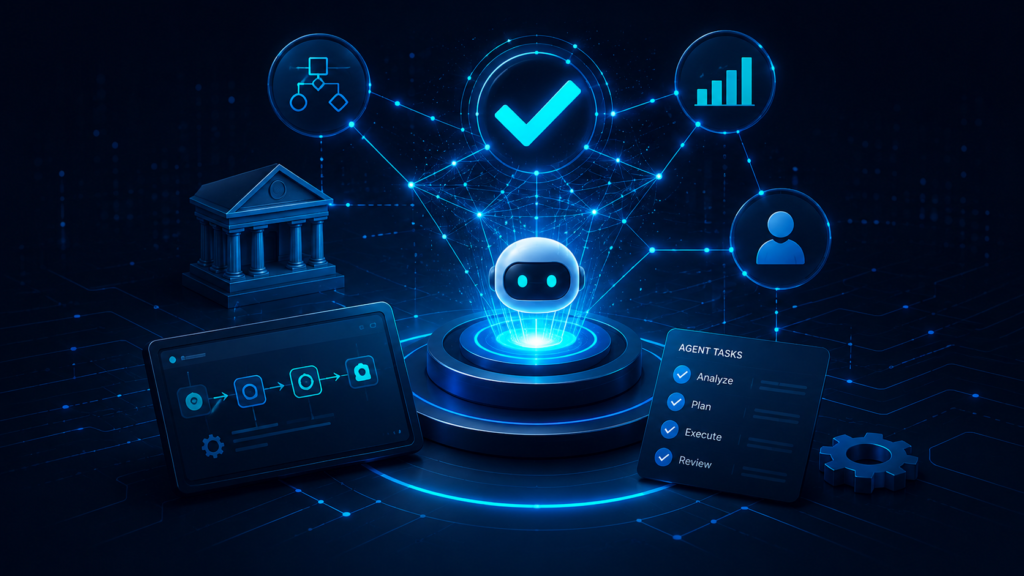
AI agents are moving beyond simple question-and-answer interactions.
Modern agents can reason about tasks, use tools, retrieve information, and perform multiple steps to accomplish a goal.
But giving an AI system more autonomy also introduces new risks.
What Makes an AI Agent Different?
A traditional chatbot might answer:
“How do I reset my password?”
An agent could potentially identify the user, check the account, initiate the reset process, verify the result, and notify the user.
The difference is action.
Start With Controlled Workflows
Organizations should avoid giving agents unlimited access to business systems.
Instead, define exactly what an agent is allowed to do.
For example:
- Read customer information
- Create a support ticket
- Update specific fields
- Send a predefined notification
Each action should have clearly defined permissions.
Add Guardrails
Guardrails can prevent agents from performing unsafe or unintended actions.
Important controls include:
- Permission boundaries
- Input validation
- Output validation
- Approval steps
- Rate limits
- Audit logs
- Human escalation
Humans Should Remain in the Loop
Not every action needs human approval.
Low-risk tasks can often be automated, while high-impact actions should require confirmation.
This creates a practical balance between automation and control.
Test for Failure
Agentic systems should be tested against unexpected situations.
What happens if:
- An API fails?
- The model misunderstands the request?
- Required information is missing?
- A tool returns incorrect data?
- The agent gets stuck in a loop?
Designing for these scenarios is critical.

Buy, build, or integrate: an AI decision framework for leaders
How to decide where to invest — and where to wait — across an AI roadmap.

Putting Claude into production: what actually breaks, and how to prevent it
The gap between a convincing demo and a system you can trust at scale is mostly engineering discipline. Here's the checklist we run on every deployment.
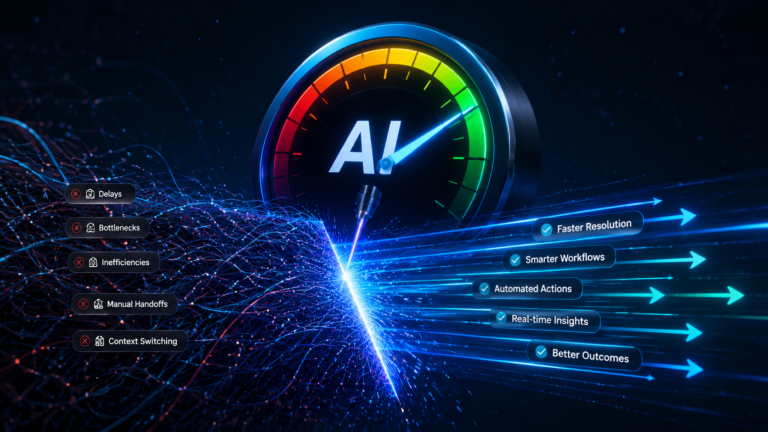
Cutting resolution time with AI inside ServiceNow
Where generative AI actually moves the needle on service management metrics.